The preprint «Hacking elections: A quantitative analysis of cyber-enabled foreign election interference» (APSA Preprints, 2026) represents a highly valuable and timely contribution to the study of digital interference in electoral processes. At a moment when the phenomenon is often discussed in normative or security-driven terms, the article stands out for its systematic empirical approach and its effort to identify broader patterns across cases.
One of the paper’s principal strengths lies in its dataset construction and quantitative design. By moving beyond isolated case studies, the authors provide a more generalisable account of cyber-enabled electoral interference, allowing for the identification of recurring dynamics across the international system. In this sense, the article significantly advances the empirical foundations of the field.
When Power Becomes the Key Variable
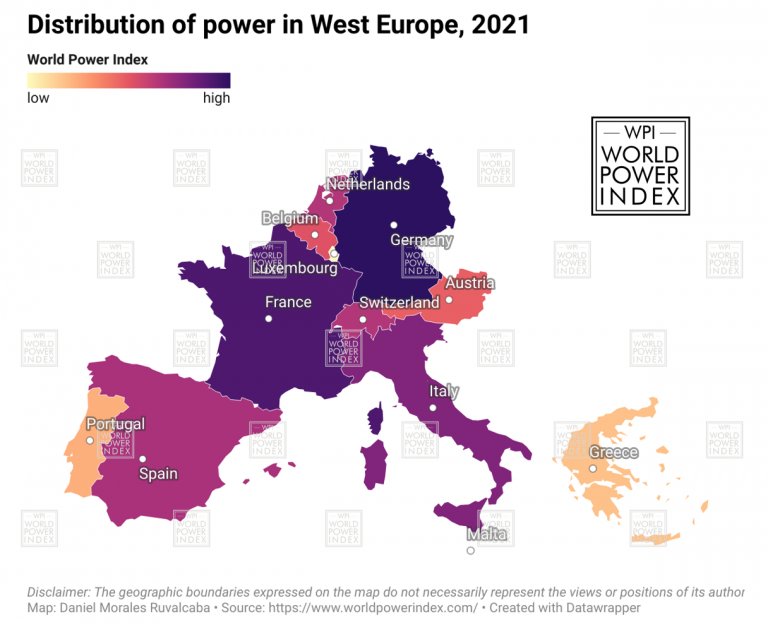
Particularly noteworthy is the finding that national power emerges as a strong and consistent predictor of electoral interference. The inclusion of the World Power Index (WPI) introduces a more refined proxy for capturing the relative weight of states. The statistical significance of this variable is not merely a technical result; it carries substantial analytical implications.
Specifically, the findings suggest that cyber-enabled electoral interference tends to be directed preferentially toward states with greater relative weight in the international system. This shifts the analytical focus away from explanations centred exclusively on vulnerability and toward a logic of strategic relevance. In other words, states appear to be targeted not simply because they are exposed, but because they matter.
From Vulnerability to Strategic Relevance
This empirical result is theoretically suggestive. It points to the possibility that electoral interference in the digital domain follows patterns consistent with broader dynamics of competition among states situated at different levels of power. From this perspective, such operations can be understood as instruments through which actors seek to influence the trajectories of other states whose positioning has wider systemic implications.
This shift—from vulnerability to relevance—has important consequences for how the phenomenon is conceptualised. It suggests that electoral interference should be analysed not only as a security issue, but also as a dimension of power politics in the digital domain.
An Open Agenda for Theory Building
At the same time, this is precisely where the article opens an important opportunity for further development. While the WPI is effectively incorporated as an explanatory variable, it is not fully embedded within an explicit theoretical framework on power, geoestructural positioning, or competition in the international system. As a result, the empirical findings are compelling, but their theoretical interpretation remains only partially developed.
This does not detract from the contribution of the article—on the contrary, it highlights its potential. By demonstrating that national power is a key predictor, the study lays the groundwork for a broader research agenda. Future work could build on this insight to explore more systematically how patterns of interference relate to the distribution of power, the positioning of states, and the forms of interaction that emerge under conditions of competition.
In this sense, the article does more than provide answers; it reframes the question. It suggests that cyber-enabled electoral interference should be understood as a phenomenon embedded in the dynamics of the international system, opening a promising line of inquiry at the intersection of cybersecurity and power analysis.